BRICS vs The West: The Financial Power Battle
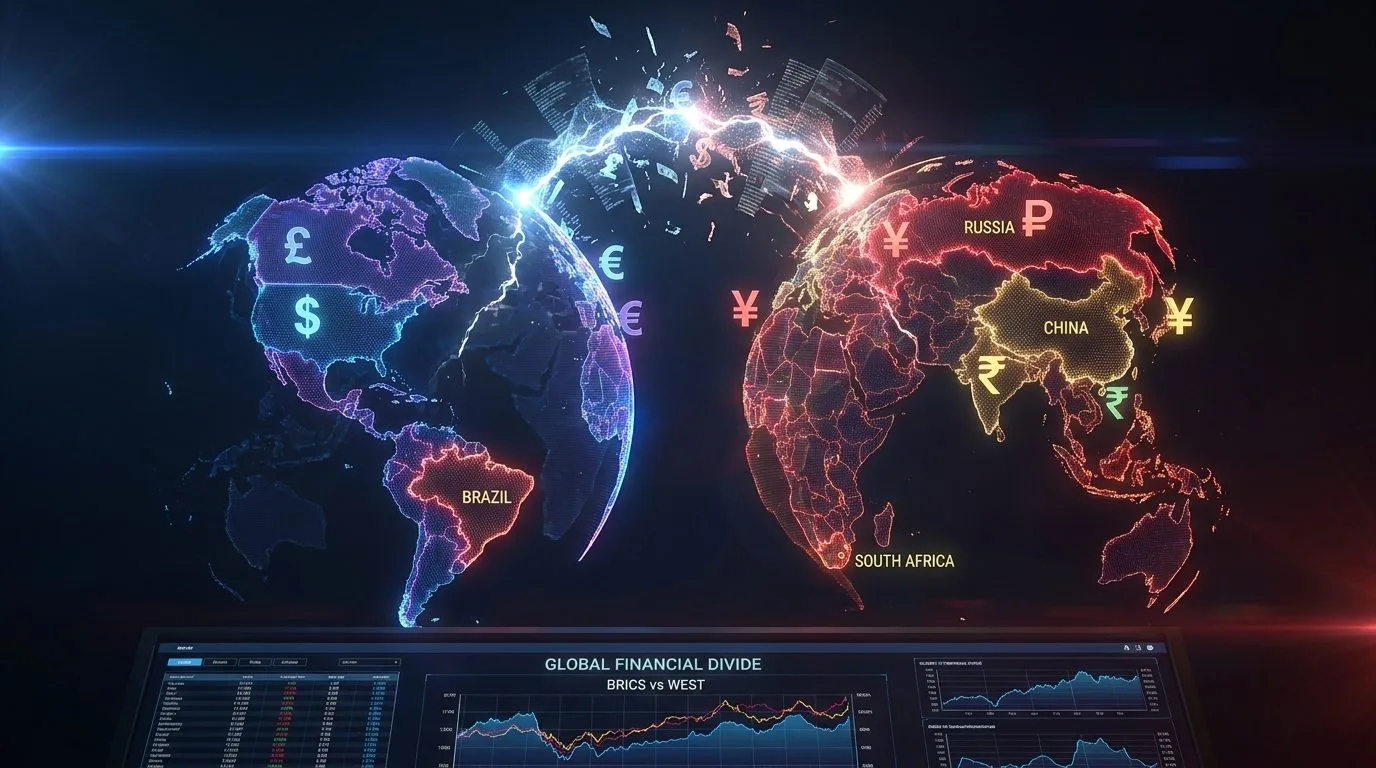
In 2026, the global financial system is experiencing a significant transformation driven by the growing influence of emerging economies. At the center of this shift is the ongoing power struggle between the BRICS nations—Brazil, Russia, India, China, and South Africa—and the traditional economic dominance of the Western world. This dynamic is reshaping global trade, currency systems, and investment strategies, creating both challenges and opportunities for businesses and investors.
The concept of BRICS vs the West is no longer just a geopolitical discussion. It has become a defining factor in global finance, influencing how capital flows, how currencies are valued, and how economic power is distributed. Understanding this shift is essential for anyone seeking to navigate the complexities of modern markets.
Understanding BRICS and Western Financial Power
The Western financial system has historically been dominated by economies such as the United States and Europe. These regions have controlled key institutions, including global banking networks, financial markets, and reserve currencies. The US dollar, in particular, has played a central role in international trade and finance, providing stability and liquidity.
BRICS nations, on the other hand, represent a coalition of emerging economies with rapidly growing influence. Together, they account for a significant portion of the world’s population and economic output. Their collective strength lies in their ability to leverage resources, manufacturing capabilities, and expanding domestic markets.
This contrast between established power and emerging influence sets the stage for a financial competition that is redefining global dynamics.
The Rise of BRICS in Global Finance
Over the past decade, BRICS nations have taken strategic steps to increase their role in global finance. Investments in infrastructure, technology, and trade partnerships have strengthened their economic positions. These efforts have been supported by policies aimed at reducing dependence on Western financial systems.
China’s economic expansion, India’s technological growth, and the resource wealth of countries like Brazil and Russia have contributed to the bloc’s rising influence. As these economies continue to grow, they are attracting significant global investment.
The development of alternative financial institutions and payment systems is another key factor. By creating their own frameworks, BRICS nations are reducing reliance on Western-dominated systems and increasing their financial autonomy.
Currency Wars and the Shift Away from the Dollar
One of the most critical aspects of the BRICS vs West dynamic is the competition between currencies. The US dollar has long been the dominant global reserve currency, but its position is increasingly being challenged.
BRICS nations are actively exploring ways to conduct trade in their own currencies. Bilateral agreements and regional trade initiatives are reducing the need for dollar-based transactions. This shift is gradual but significant, as it reflects a broader move toward a multipolar currency system.
The introduction of digital currencies and central bank digital currencies adds another dimension to this competition. These innovations have the potential to reshape how transactions are conducted, further influencing the balance of power in global finance.
While the dollar remains a dominant force, the emergence of alternative currencies indicates a changing landscape. Investors must pay close attention to these developments, as they have far-reaching implications for global markets.
Trade Alliances and Economic Influence
Trade alliances play a crucial role in the BRICS vs West financial battle. As countries seek to strengthen their economic positions, they are forming partnerships that enhance trade and investment opportunities.
BRICS nations are focusing on regional cooperation, leveraging their collective strengths to create more resilient economic systems. These alliances enable them to negotiate better terms, access new markets, and reduce dependence on external powers.
The West, meanwhile, continues to maintain strong trade networks and financial influence. However, the rise of alternative alliances is creating a more competitive environment, where influence is no longer concentrated in a single region.
This shift has significant implications for global businesses. Companies must navigate a more complex landscape, balancing opportunities across different regions and adapting to changing trade dynamics.
The Impact on Global Markets and Investors
The financial power battle between BRICS and the West is reshaping global markets. Investors are witnessing changes in currency dynamics, trade flows, and economic growth patterns. These shifts create both risks and opportunities.
Diversification has become increasingly important. Investors are looking beyond traditional markets to explore opportunities in emerging economies. This approach allows them to capture growth while managing risk.
Access to global financial solutions is also critical. Companies like Mint Capital Investment provide tools that enable investors to navigate international markets, access trade finance, and manage cross-border transactions effectively. These capabilities are essential in a world where financial power is becoming more distributed.
Understanding the interplay between BRICS and Western economies helps investors make informed decisions. It provides insights into where capital is likely to flow and which markets may offer the greatest potential.
The Future of the Global Financial System
The future of global finance is likely to be defined by a balance of power rather than dominance by a single entity. The rise of BRICS signals a shift toward a more diversified and interconnected system.
This evolution will be driven by technological advancements, economic growth, and strategic cooperation. Both BRICS nations and Western economies will continue to play significant roles, shaping the direction of global markets.
For investors and businesses, the key is adaptability. The ability to understand and respond to these changes will determine success in an increasingly complex environment.
In 2026, the financial power battle between BRICS and the West is not about replacement—it is about transformation. The global economy is moving toward a new era where influence is shared, and opportunities are distributed more widely.
The implications of this shift are profound. It affects everything from currency valuations to trade agreements and investment strategies. Those who recognize these changes early will be better positioned to capitalize on the opportunities they create.
The question is no longer whether the balance of power is changing, but how quickly it will evolve and how the world will adapt to this new financial reality.