Global Economy Power Shift 2026: A New Financial Era Begins
The global economy in 2026 is no longer defined by a single dominant force but by a rapidly evolving network of economic powers competing, collaborating, and reshaping the future of wealth and trade. What was once a predictable system led by a handful of Western economies has now transformed into a dynamic and complex structure driven by emerging markets, technological disruption, and geopolitical realignment. This shift is not gradual anymore; it is happening at speed, and its impact is being felt across industries, governments, and financial systems worldwide.
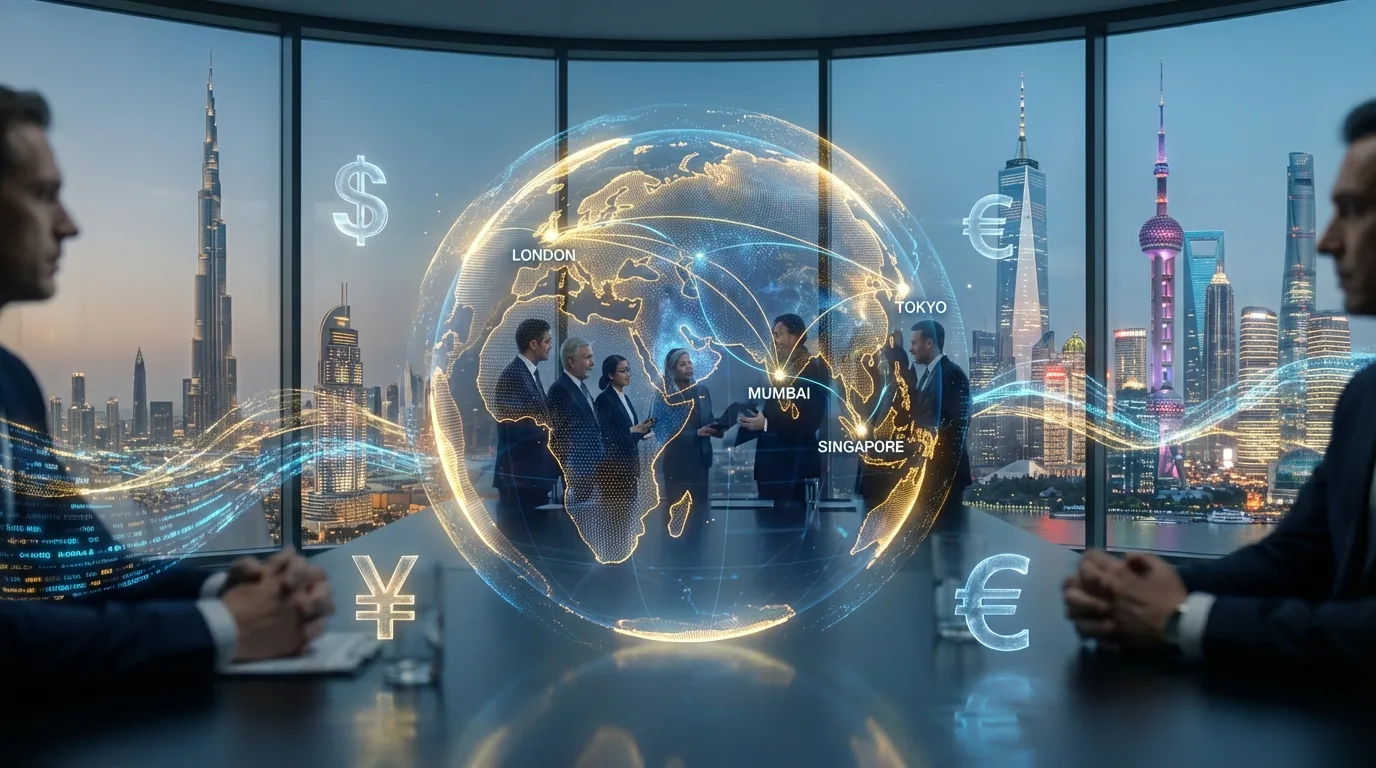
The idea of a centralized global economic order is slowly fading. Instead, we are witnessing the rise of a multipolar economy where influence is distributed among several powerful regions, including Asia, the Middle East, and parts of Africa. These regions are not just participating in global trade; they are redefining its rules. As capital flows shift and new financial corridors open, businesses and investors must adapt quickly or risk being left behind.
The End of Traditional Economic Dominance
For decades, global economic leadership was heavily concentrated in the United States and Europe. Their financial systems, currencies, and institutions set the standard for international trade and investment. However, in 2026, this dominance is being challenged more aggressively than ever before. Economic growth in emerging markets is outpacing traditional economies, and their influence is expanding into sectors that were once tightly controlled by the West.
This change is not just about GDP growth; it is about control over infrastructure, supply chains, and financial systems. Countries that were once considered developing are now building their own economic ecosystems, reducing dependency on Western markets. As a result, the balance of power is shifting, and with it, the rules of global engagement.
The Rise of New Global Alliances
One of the most significant drivers of this transformation is the emergence of new economic alliances. These partnerships are not only based on trade agreements but also on shared financial goals, infrastructure development, and technological collaboration. Nations are increasingly aligning with partners that offer strategic advantages rather than traditional political alliances.
These new alliances are creating alternative trade routes, financial systems, and even payment networks that bypass traditional Western-controlled channels. This has profound implications for global commerce, as it reduces reliance on legacy systems and opens the door for faster, more flexible economic interactions. The result is a more competitive and diversified global market where power is distributed rather than centralized.
Currency Power and the Future of the US Dollar
One of the most talked-about aspects of the global economic shift is the evolving role of the US dollar. While it remains the dominant reserve currency, its position is being increasingly questioned as countries explore alternatives for trade and reserves. In 2026, we are seeing a growing trend toward multi-currency transactions, where businesses and governments use a mix of currencies rather than relying solely on the dollar.
This shift is driven by both economic and political factors. Countries are seeking greater financial independence and stability by diversifying their currency exposure. At the same time, advancements in digital currencies and central bank digital currencies are providing new tools for cross-border transactions. These innovations are making it easier to conduct trade without relying on traditional currency systems, further accelerating the shift away from a single dominant currency.
Trade Transformation in a Multipolar World
Global trade is undergoing a major transformation as supply chains become more regionalized and technology-driven. The disruptions of recent years have highlighted the risks of over-dependence on a single region or supplier. As a result, businesses are rethinking their strategies and building more resilient and diversified supply chains.
In this new environment, trade finance is also evolving. Traditional processes that were once slow and paper-heavy are being replaced by digital solutions that enable faster approvals and greater transparency. This is particularly important for companies looking to expand internationally, as access to efficient trade finance can be a key differentiator in a competitive market.
At the same time, emerging markets are becoming central to global trade growth. Their increasing demand, coupled with their expanding production capabilities, is reshaping trade flows and creating new opportunities for businesses willing to adapt to changing conditions.
Technology and AI Driving Economic Control
Technology is playing a critical role in reshaping the global economy. Artificial intelligence, blockchain, and digital platforms are not just enhancing efficiency; they are redefining how economic power is exercised. In 2026, the ability to control and leverage technology is becoming as important as traditional economic indicators like GDP or trade volume.
AI is enabling faster decision-making in areas such as credit approvals, risk assessment, and investment strategies. Blockchain is improving transparency and security in transactions, reducing the need for intermediaries. Digital platforms are connecting markets and enabling real-time global commerce. Together, these technologies are creating a more interconnected and efficient global economy.
However, they are also creating new challenges. The countries and companies that control these technologies have a significant advantage, leading to a new form of economic competition centered around innovation and data.
What This Means for Businesses and Investors
For businesses and investors, the global economic power shift presents both risks and opportunities. On one hand, increased competition and uncertainty can make it more difficult to navigate international markets. On the other hand, the emergence of new economic centers and financial systems creates opportunities for growth and diversification.
Companies that want to succeed in this new environment must be agile and forward-thinking. This means embracing new technologies, exploring new markets, and building strong financial strategies that can adapt to changing conditions. Access to global banking solutions, trade finance, and international networks is becoming increasingly important for businesses looking to scale.
Investors, meanwhile, must look beyond traditional markets and consider opportunities in emerging economies and innovative sectors. The shift toward a multipolar world means that growth is no longer concentrated in a few regions; it is spread across a wide range of markets, each with its own unique dynamics.
The Future of Global Economic Power
As we move further into 2026, it is clear that the global economy is entering a new era defined by complexity, competition, and opportunity. The shift in power is not a temporary trend; it is a fundamental transformation that will shape the future of trade, finance, and investment for years to come.
The key to navigating this new landscape lies in understanding the forces driving change and being prepared to adapt. Whether it is through embracing new technologies, forming strategic partnerships, or exploring new markets, those who can anticipate and respond to these shifts will be best positioned to succeed.
In a world where economic power is no longer concentrated but distributed, the ability to move quickly and think globally is more important than ever. The rules are changing, and the winners will be those who recognize the shift early and act decisively.