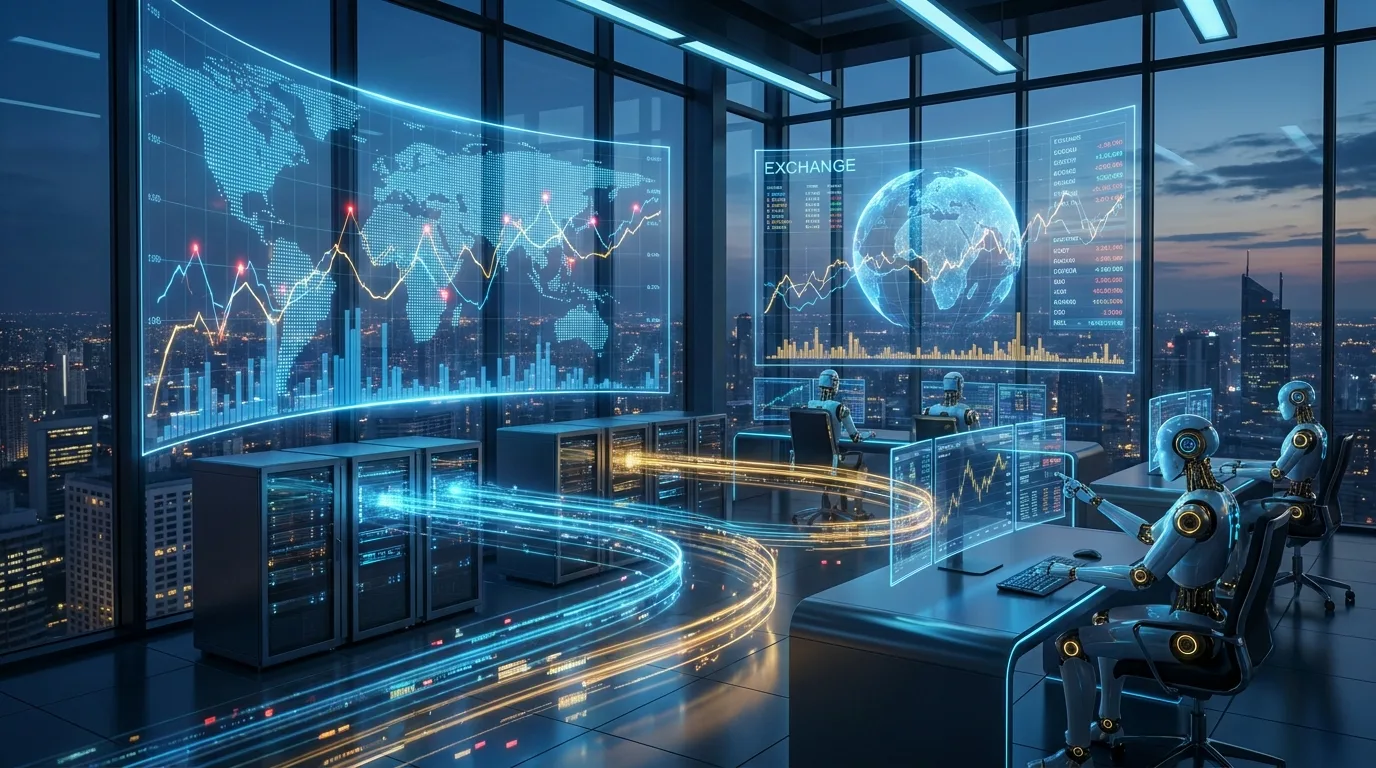
Self-Regulating Markets: When AI Systems Control Volatility, Liquidity, and Risk in Real Time
The global financial system is on the verge of a transformation that could redefine how markets operate at their core. For decades, markets have been influenced by human behavior, institutional decisions, and regulatory frameworks designed to maintain stability. However, with the rapid advancement of artificial intelligence, a new paradigm is emerging—self-regulating markets. In this future, AI systems will take an active role in controlling volatility, managing liquidity, and optimizing risk in real time, creating a more efficient and resilient financial ecosystem.
This evolution is not simply an upgrade to existing systems. It represents a fundamental shift from reactive regulation to proactive, intelligent control. Instead of responding to market disruptions after they occur, AI-driven systems will anticipate and mitigate risks before they escalate, ensuring smoother and more stable market conditions.
The Emergence of Self-Regulating Markets
Self-regulating markets are the result of integrating artificial intelligence into the core infrastructure of financial systems. These markets rely on advanced algorithms and machine learning models to monitor and analyze vast amounts of data in real time. By doing so, they can identify patterns, detect anomalies, and make decisions at a speed and scale that far exceeds human capabilities.
The concept is rooted in the idea that markets can become adaptive systems. Instead of relying solely on external regulation, they can adjust their behavior dynamically based on changing conditions. This is made possible by the continuous flow of data from trading platforms, financial institutions, and global economic indicators.
As AI systems become more sophisticated, they will be able to coordinate across different markets and asset classes, creating a unified approach to regulation and stability. This interconnectedness will enhance the overall efficiency of the financial system and reduce the likelihood of systemic risks.
How AI Controls Volatility in Real Time
Volatility has always been a defining characteristic of financial markets. While it creates opportunities for profit, it also introduces uncertainty and risk. Traditionally, volatility is managed through a combination of regulatory measures, market mechanisms, and human intervention. However, these approaches are often reactive and limited in their effectiveness.
AI systems offer a more proactive solution. By analyzing real-time market data, including price movements, trading volumes, and sentiment indicators, AI can detect early signs of instability. Once identified, the system can take immediate action to stabilize the market.
For example, AI algorithms can adjust trading parameters, such as bid-ask spreads and order execution speeds, to reduce excessive fluctuations. They can also coordinate with other systems to ensure that liquidity is distributed effectively, preventing sudden spikes or drops in prices.
This real-time intervention creates a more balanced market environment, where volatility is controlled without eliminating the natural dynamics of supply and demand. As a result, markets become more predictable and less prone to extreme disruptions.
Liquidity Optimization Through Intelligent Systems
Liquidity is the lifeblood of financial markets. It determines how easily assets can be bought and sold without significantly affecting their price. In traditional markets, liquidity is influenced by a range of factors, including market participants, economic conditions, and regulatory policies.
AI-driven systems have the ability to optimize liquidity in ways that were previously impossible. By analyzing data from multiple sources, they can identify areas where liquidity is insufficient and take steps to address the imbalance. This may involve reallocating capital, incentivizing market participation, or adjusting trading mechanisms.
One of the key advantages of AI is its ability to operate across different markets simultaneously. This allows it to coordinate liquidity on a global scale, ensuring that capital flows efficiently between regions and asset classes. For example, if liquidity is low in one market, AI systems can redirect resources from another, maintaining overall stability.
In addition, AI can enhance transparency by providing real-time insights into market conditions. This enables participants to make more informed decisions and contributes to a more efficient allocation of resources.
AI-Driven Risk Management and Market Stability
Risk management is a critical component of any financial system. In traditional markets, risk is assessed and managed through a combination of models, regulations, and human oversight. While effective to some extent, these methods are often limited by their reliance on historical data and their inability to adapt quickly to new conditions.
AI systems bring a new level of sophistication to risk management. By continuously analyzing data and learning from past events, they can identify potential risks before they materialize. This predictive capability allows for more effective mitigation strategies, reducing the likelihood of market disruptions.
AI-driven risk management also benefits from its ability to integrate multiple data sources. This includes not only financial data but also external factors such as geopolitical events, economic indicators, and social sentiment. By considering a broader range of variables, AI systems can develop a more comprehensive understanding of risk.
Furthermore, AI can implement automated responses to mitigate risks. For example, it can adjust portfolio allocations, modify trading strategies, or trigger safeguards to prevent excessive losses. These actions are executed in real time, ensuring that the market remains stable even in the face of unexpected events.
The Future of Autonomous Financial Markets
The development of self-regulating markets is still in its early stages, but the trajectory is clear. As AI technology continues to advance, its role in financial markets will expand, leading to greater levels of automation and efficiency.
In the future, markets may operate with minimal human intervention. AI systems will handle everything from trade execution to risk management, creating a fully autonomous financial ecosystem. This will not only improve efficiency but also reduce costs and increase accessibility.
For investors, this transformation offers significant benefits. More stable markets, improved liquidity, and enhanced risk management create a more favorable environment for investment. At the same time, the use of AI enables more sophisticated strategies, allowing investors to achieve better outcomes.
However, the transition to self-regulating markets also presents challenges. Issues related to transparency, accountability, and regulation must be addressed to ensure that these systems operate fairly and effectively. As AI takes on a more prominent role, establishing trust will be essential.
Despite these challenges, the potential of self-regulating markets is immense. By leveraging the power of artificial intelligence, the financial system can become more resilient, efficient, and adaptive. This represents a significant step forward in the evolution of global finance.
Ultimately, the future of markets will be defined by intelligence. As AI systems continue to evolve, they will shape the way capital is managed, risks are mitigated, and opportunities are created. In this new era, self-regulating markets will not just support the financial system—they will drive it.