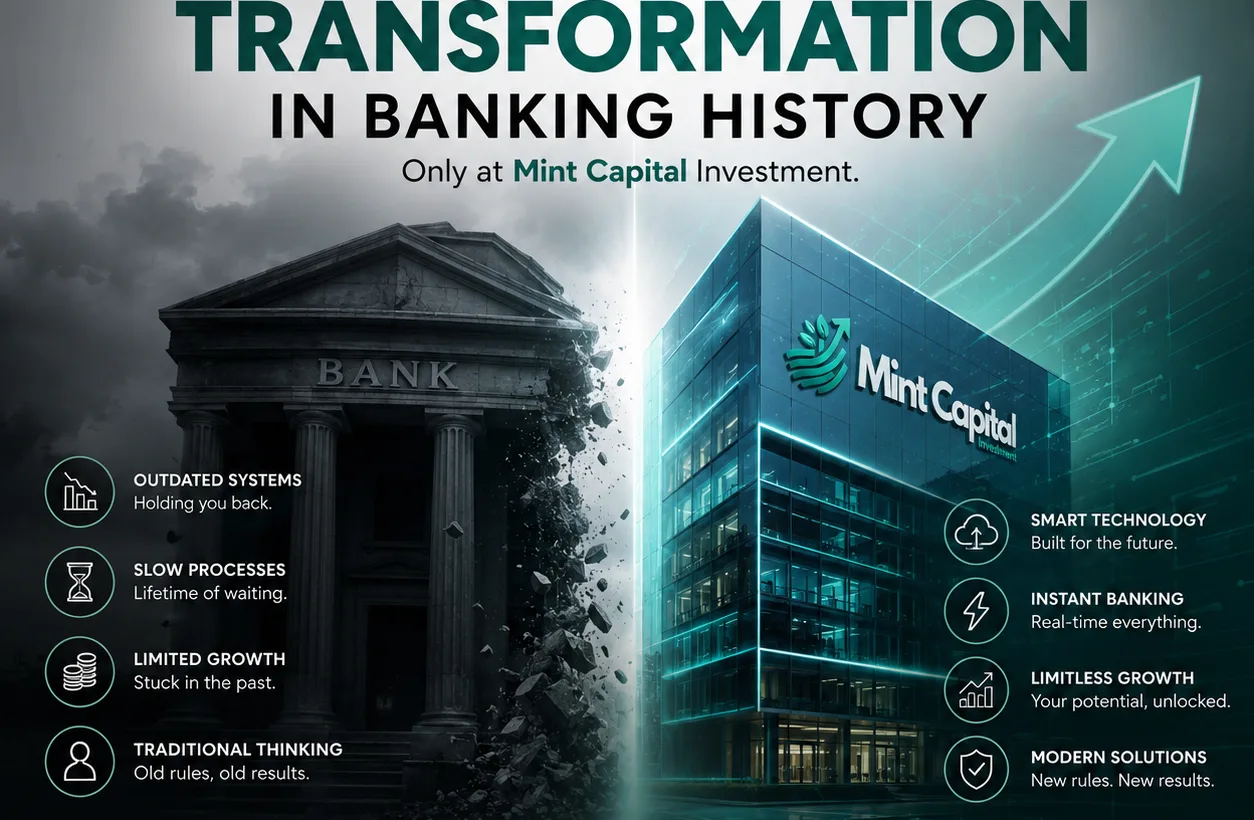
The Biggest Transformation in Banking History Has Begun
The global banking industry is experiencing the most powerful transformation in its history. What once required endless paperwork, slow approvals, physical branch visits, and limited international access is now rapidly evolving into a digital, borderless, and technology-driven financial ecosystem. Businesses worldwide are no longer looking for traditional banking alone. They are searching for speed, global access, financial flexibility, trade finance solutions, digital infrastructure, and smarter financial partnerships that can help them compete in a modern economy.
The future of banking is no longer a concept reserved for large financial institutions or technology giants. It is happening right now across every industry, every market, and every country. The rise of financial technology, artificial intelligence, cross-border payment systems, digital banking platforms, and global trade finance infrastructure has created a completely new financial landscape. Companies that adapt early are positioning themselves to grow faster, access larger markets, and operate internationally with greater efficiency than ever before.
The Banking Industry Is Entering a New Era
For decades, banking systems remained relatively unchanged. Traditional financial institutions relied heavily on outdated processes, manual operations, and slow approval systems that were designed for a different era. While these systems once supported economic growth, they are now struggling to keep up with the speed of modern global commerce.
Businesses today operate in a world driven by instant communication, digital marketplaces, international supply chains, and global customers. Modern companies expect banking solutions that move at the same speed as technology. This shift has forced the financial industry to evolve rapidly toward digital transformation and smarter infrastructure.
The biggest transformation in banking history is being fueled by innovation. Financial technology companies and modern investment firms are now bridging the gap between traditional finance and next-generation digital banking. They are creating systems designed for international business growth, instant global connectivity, and modern trade finance operations.
Why Traditional Banking Models Are Failing
One of the biggest challenges businesses face today is the limitation of traditional banking structures. Many companies still experience delayed international transfers, complex compliance procedures, restricted global access, and long waiting periods for financing approvals. These outdated systems slow business growth and reduce global competitiveness.
Traditional banks were originally built around local economies and physical branch systems. However, the world economy has become increasingly globalized. Businesses now require international banking support, cross-border payment systems, multi-currency operations, and fast financial access that older banking models were never designed to handle efficiently.
Modern businesses are demanding smarter banking ecosystems that combine security, digital access, speed, and financial flexibility. This demand is creating a major shift in how financial services are delivered worldwide.
The Rise of Digital Financial Infrastructure
Digital financial infrastructure is becoming the backbone of the new banking world. Modern financial platforms now integrate advanced technology, cloud systems, secure APIs, AI-driven compliance tools, and automated financial services to deliver faster and more efficient banking experiences.
Digital banking solutions are enabling businesses to manage global operations from anywhere in the world. Companies can now access international banking services, process payments instantly, manage trade finance facilities, monitor financial activity in real time, and expand internationally without relying on traditional banking limitations.
The evolution of financial infrastructure is not only improving convenience but also increasing financial inclusion for businesses worldwide. Entrepreneurs, startups, global traders, contractors, investors, and corporations can now access financial opportunities that were previously difficult to obtain.
Global Banking Without Borders
The future of banking is becoming increasingly borderless. Businesses no longer want banking systems limited by geography. They require global financial access that supports international trade, overseas partnerships, worldwide investments, and cross-border operations.
Modern financial platforms are helping companies open international banking relationships, access multiple currencies, streamline international transfers, and operate globally with greater confidence. This transformation is especially important for businesses involved in import and export activities, international projects, real estate investments, infrastructure development, and global commerce.
As the world economy becomes more interconnected, banking institutions and financial service providers must continue adapting to support global business growth. Companies that leverage global banking infrastructure will have a significant advantage in the years ahead.
Trade Finance Is Becoming Faster and Smarter
Trade finance is another area experiencing major transformation. Historically, international trade financing involved slow paperwork processes, complex bank coordination, and lengthy approval times. Today, digital finance platforms are changing the way trade finance operates.
Modern trade finance systems now support faster approvals, digital documentation, secure international transactions, and more efficient global funding structures. Businesses can access financial facilities designed to support imports, exports, construction projects, commodity trading, and international expansion.
The integration of digital banking with trade finance solutions is helping businesses unlock larger opportunities worldwide. Companies are gaining access to financial structures that allow them to operate more efficiently in highly competitive international markets.
AI and Financial Technology Are Reshaping Banking
Artificial intelligence is becoming one of the most important drivers of banking transformation. AI-powered financial systems are improving fraud detection, customer support, transaction monitoring, risk management, compliance verification, and financial analytics.
Financial technology companies are also leveraging machine learning and automation to improve banking speed and operational efficiency. This allows businesses to receive faster services, smarter financial insights, and more accurate financial decision-making support.
The combination of AI, automation, and digital infrastructure is helping reshape the entire banking experience. Customers now expect instant service, seamless digital access, and intelligent financial solutions that adapt to modern business needs.
Security, Speed, and Global Access Matter More Than Ever
As digital banking grows, businesses are placing greater importance on security, compliance, and financial reliability. Modern financial platforms must provide secure systems that protect transactions, customer data, and international financial operations.
At the same time, speed remains essential. Businesses cannot afford delays in international payments, financing approvals, or cross-border operations. Modern banking solutions must balance security with efficiency to support global business activity effectively.
Companies that invest in advanced financial infrastructure are creating more secure and efficient systems capable of supporting the future global economy.
The Future of Banking Belongs to Innovation
The future of banking will be defined by innovation, connectivity, automation, and global access. Financial institutions and investment companies that embrace technology will lead the next era of global finance.
Businesses are increasingly looking for financial partners capable of delivering complete ecosystems rather than basic banking services alone. They want access to trade finance, international payments, project funding, digital financial tools, and strategic financial support under one modern platform.
This transformation represents more than technological advancement. It represents a complete shift in how businesses interact with global finance.
How Businesses Can Prepare for the Banking Revolution
Businesses that want to remain competitive must begin adapting to the new financial world today. This includes embracing digital financial solutions, exploring international banking opportunities, integrating smarter payment systems, and building relationships with modern financial partners.
The companies that move early into advanced banking infrastructure will gain a major competitive advantage in speed, scalability, and global market access. The future economy will reward businesses that operate with agility, innovation, and financial intelligence.
Mint Capital Investment and the Future of Finance
Mint Capital Investment represents a modern vision for global finance and banking innovation. Through strategic international partnerships, global financial connectivity, and advanced financial solutions, the company supports businesses seeking smarter banking opportunities, trade finance access, project funding solutions, and modern financial growth.
The biggest transformation in banking history has already begun. Businesses that embrace this new era will position themselves for long-term growth, international expansion, and future financial success in a rapidly evolving global economy.