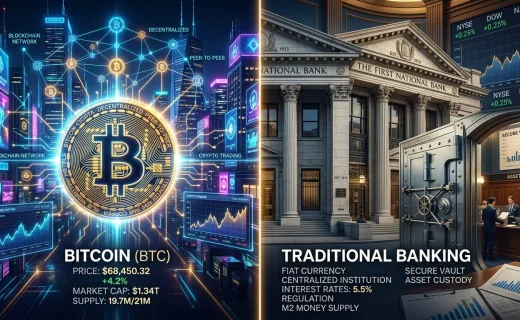
Banking, Crypto & Trade Finance: The New Financial Trinity
In 2026, the global financial system is undergoing a transformation that is reshaping how money moves, how businesses operate, and how investors build wealth. For decades, traditional banking stood at the center of this system, providing the infrastructure for transactions, lending, and financial management. However, the emergence of cryptocurrency and the continued importance of trade finance have introduced new dimensions to the financial landscape. Together, these three pillars—banking, crypto, and trade finance—are forming what can be described as the new financial trinity.
This convergence is not accidental. It reflects a broader shift toward efficiency, transparency, and global connectivity. Each component of the trinity plays a distinct role, yet their integration creates a powerful system that is greater than the sum of its parts. Understanding this evolution is essential for businesses and investors seeking to stay ahead in an increasingly complex financial environment.
The Evolution of the Global Financial System
The financial system has evolved significantly over the past century. From the establishment of central banking systems to the rise of digital finance, each phase has introduced new capabilities and opportunities. In recent years, the pace of change has accelerated, driven by technological innovation and globalization.
Traditional financial institutions have been complemented by fintech platforms and decentralized networks, creating a more dynamic ecosystem. This evolution has led to the integration of different financial models, each contributing unique strengths.
The concept of a financial trinity captures this integration. It highlights the interconnected nature of modern finance, where banking, crypto, and trade finance work together to support global economic activity.
Traditional Banking: The Foundation of Finance
Despite the rise of new technologies, traditional banking remains a cornerstone of the financial system. It provides stability, regulatory oversight, and essential services such as deposits, loans, and payment processing.
Banks play a critical role in facilitating economic activity. They enable businesses to access capital, manage cash flow, and conduct transactions. Their established infrastructure and regulatory frameworks provide a level of trust that is essential for large-scale operations.
In the context of the financial trinity, banking serves as the foundation. It supports the integration of other components, ensuring that the system operates smoothly and securely.
However, traditional banking is evolving. Institutions are adopting digital technologies and exploring new models to remain competitive in a changing environment.
Crypto and Blockchain: The Disruptive Force
Cryptocurrency and blockchain technology represent the most significant disruption to the traditional financial system. By enabling decentralized transactions, they challenge the role of intermediaries and introduce new levels of transparency and efficiency.
Blockchain technology allows for secure and immutable record-keeping, reducing the need for manual processes and enhancing trust. Cryptocurrencies provide an alternative means of transferring value, often with lower costs and faster execution.
In 2026, crypto is no longer seen as a niche or speculative asset. It is becoming an integral part of the financial ecosystem, with increasing adoption by institutions and businesses.
Within the financial trinity, crypto acts as a catalyst for innovation. It pushes the boundaries of what is possible, encouraging the development of new solutions and approaches.
Trade Finance: The Engine of Global Commerce
Trade finance is the mechanism that enables global commerce. It provides the financial tools needed to facilitate the movement of goods and services across borders, ensuring that transactions are secure and efficient.
Instruments such as letters of credit, SBLCs, and bank guarantees play a central role in trade finance. They provide assurance to buyers and sellers, reducing risk and enabling large-scale transactions.
Trade finance is essential for businesses involved in international trade. It supports cash flow, enhances credibility, and allows companies to operate on a global scale.
As global trade continues to expand, the importance of trade finance is only expected to grow. It remains a key driver of economic activity and a critical component of the financial trinity.
The Convergence of Banking, Crypto, and Trade Finance
The true power of the financial trinity lies in the convergence of its components. Banking provides the infrastructure and trust, crypto introduces innovation and efficiency, and trade finance enables global transactions. Together, they create a system that is both robust and adaptable.
This convergence is already visible in various forms. Banks are integrating blockchain technology to improve efficiency and reduce costs. Crypto platforms are exploring partnerships with financial institutions to enhance credibility and access. Trade finance is adopting digital solutions to streamline processes and increase transparency.
For businesses, this integration offers significant advantages. It enables faster transactions, reduces costs, and provides access to a wider range of financial services. It also enhances the ability to operate globally, connecting markets and opportunities.
Companies like Mint Capital Investment are at the forefront of this transformation, offering solutions that combine global banking, trade finance facilities, and access to modern financial tools. This integrated approach reflects the future of finance.
The Future of the Financial Trinity
The future of the financial trinity is defined by continued integration and innovation. As technology advances, the boundaries between banking, crypto, and trade finance will become increasingly blurred.
Digital currencies, including central bank digital currencies, are expected to play a significant role. They will bridge the gap between traditional and decentralized systems, creating new opportunities for efficiency and growth.
Automation and artificial intelligence will further enhance the capabilities of the financial system. These technologies will enable faster decision-making, improved risk management, and more personalized financial services.
Global connectivity will also increase. Businesses and investors will be able to operate seamlessly across borders, accessing markets and opportunities with greater ease.
For investors, understanding the financial trinity is essential for staying ahead. It provides a framework for navigating the complexities of modern finance and identifying opportunities for growth.
In 2026, the convergence of banking, crypto, and trade finance represents a new era in global finance. It is a system that combines stability, innovation, and efficiency, offering a powerful platform for economic activity.
The question is not whether this transformation will continue, but how quickly it will evolve and who will be best positioned to take advantage of it. Those who embrace the financial trinity will be at the forefront of this new era, shaping the future of wealth and investment.
The new financial system is already here. Understanding it is the first step toward mastering it.