Crypto in 2026: Regulation, Opportunity, or Collapse?
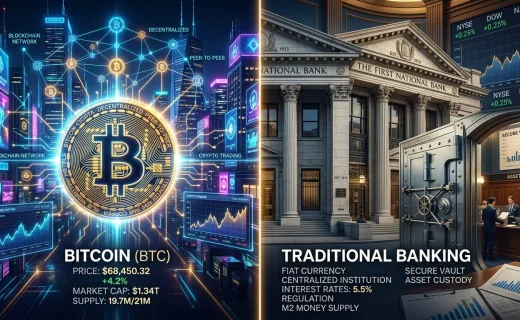
The story of crypto in 2026 is no longer a simple narrative of innovation or disruption. It has evolved into a complex global phenomenon that sits at the intersection of finance, technology, and regulation. Once seen as an alternative to traditional banking, cryptocurrency has now entered the mainstream, attracting governments, institutions, and global investors. Yet, with this evolution comes uncertainty. The question dominating the conversation is clear: is crypto heading toward a regulated future filled with opportunity, or is it approaching a breaking point that could trigger collapse?
To understand where crypto is heading, it is essential to look at the forces shaping its trajectory. Regulation is tightening, institutional capital is increasing, and technological advancements continue to redefine what is possible. At the same time, volatility, market speculation, and security concerns remain persistent challenges. The balance between these forces will determine the future of crypto in 2026 and beyond.
The State of Crypto in 2026
Crypto in 2026 is significantly more mature than it was just a few years ago. The market has expanded beyond speculative trading into real-world applications, including payments, decentralized finance, tokenized assets, and digital identity solutions. Major corporations and financial institutions are now actively involved, bringing credibility and scale to the ecosystem.
However, this maturity has also exposed the limitations of the market. Scalability issues, regulatory uncertainty, and fragmentation across different blockchain networks continue to pose challenges. Despite these obstacles, the underlying technology remains strong, and innovation is accelerating.
What sets 2026 apart is the level of integration between crypto and traditional finance. Banks, fintech platforms, and payment providers are increasingly incorporating crypto services, blurring the lines between decentralized and centralized systems.
The Rise of Global Regulation
Regulation is one of the most significant factors shaping the future of crypto. Governments around the world are no longer ignoring the space. Instead, they are actively developing frameworks to control, monitor, and integrate cryptocurrencies into the financial system.
In many ways, regulation is a double-edged sword. On one hand, it provides legitimacy and protection for investors. Clear rules reduce the risk of fraud, enhance transparency, and encourage institutional participation. On the other hand, excessive regulation can stifle innovation and limit the core principles of decentralization that define crypto.
The challenge for regulators is to strike the right balance. Too little oversight can lead to instability, while too much control can drive innovation away. The outcome of this balancing act will play a critical role in determining whether crypto thrives or struggles in the coming years.
Institutional Money Is Changing the Game
One of the most defining trends in crypto in 2026 is the influx of institutional capital. Hedge funds, asset managers, and even traditional banks are allocating significant resources to digital assets. This shift is transforming the market from a retail-driven ecosystem into a more structured financial environment.
Institutional involvement brings several advantages. It increases liquidity, reduces volatility over time, and introduces more sophisticated financial products. At the same time, it also changes the dynamics of the market. Large players have the ability to influence prices and trends, making it more challenging for smaller investors to compete.
This institutional presence is also driving the development of infrastructure, including custody solutions, compliance systems, and regulated exchanges. As a result, crypto is becoming more accessible to a broader audience, further accelerating its adoption.
Opportunities Hidden in the Chaos
Despite the challenges, crypto in 2026 continues to offer significant opportunities. Innovation in decentralized finance has created new ways to lend, borrow, and earn yield without relying on traditional banks. Tokenization is unlocking new asset classes, allowing investors to access markets that were previously out of reach.
Emerging sectors such as Web3, blockchain gaming, and digital identity are also attracting attention. These areas represent the next phase of crypto evolution, where technology moves beyond finance into broader applications.
For investors and businesses, the key lies in identifying opportunities early. The rapid pace of change means that new trends can emerge quickly, offering high returns for those who are prepared to act.
Companies like Mint Capital Investment are increasingly exploring ways to integrate traditional finance with digital assets, providing clients with access to both worlds. This hybrid approach reflects the direction in which the financial system is heading.
The Collapse Narrative: Real Risk or Fear?
The idea of a crypto collapse is not new. Critics have long argued that the market is driven by speculation and lacks intrinsic value. While there is some truth to these concerns, the reality is more nuanced.
Crypto markets are inherently volatile, and periods of sharp decline are part of the cycle. However, each downturn has historically been followed by innovation and growth. The ecosystem has shown resilience, adapting to challenges and emerging stronger over time.
That said, risks do exist. Regulatory crackdowns, technological failures, and macroeconomic factors could all impact the market. The key difference in 2026 is that the stakes are much higher. With institutional capital and global adoption at play, any major disruption could have widespread consequences.
Understanding these risks is essential for anyone involved in the space. While the potential for collapse cannot be ignored, it is equally important to recognize the underlying strength of the technology and its growing adoption.
What the Future of Crypto Really Looks Like
The future of crypto in 2026 is unlikely to be defined by a single outcome. Instead, it will be shaped by a combination of regulation, innovation, and market dynamics. A fully decentralized system replacing traditional finance is unlikely, just as a complete collapse is improbable.
What is more likely is the emergence of a hybrid financial ecosystem. In this model, traditional institutions and decentralized platforms coexist, each serving different needs. Regulation will provide structure, while innovation will continue to push boundaries.
For investors, this means adapting to a new reality. Success will depend on understanding both traditional financial principles and the unique characteristics of digital assets. Those who can navigate this landscape effectively will be well-positioned to benefit from the opportunities ahead.
As the world continues to embrace digital transformation, crypto will remain a central part of the conversation. Whether it becomes a dominant force or a complementary system, its impact on global finance is undeniable.
The real question is not whether crypto will survive, but how it will evolve. In 2026, the answer is still unfolding, and those paying attention have the opportunity to shape the outcome.